




The Family of Mary
circa 1505 — 1515
National Museum in Szczecin
Part of the collection: Indigenous Latin American Communities Crafts
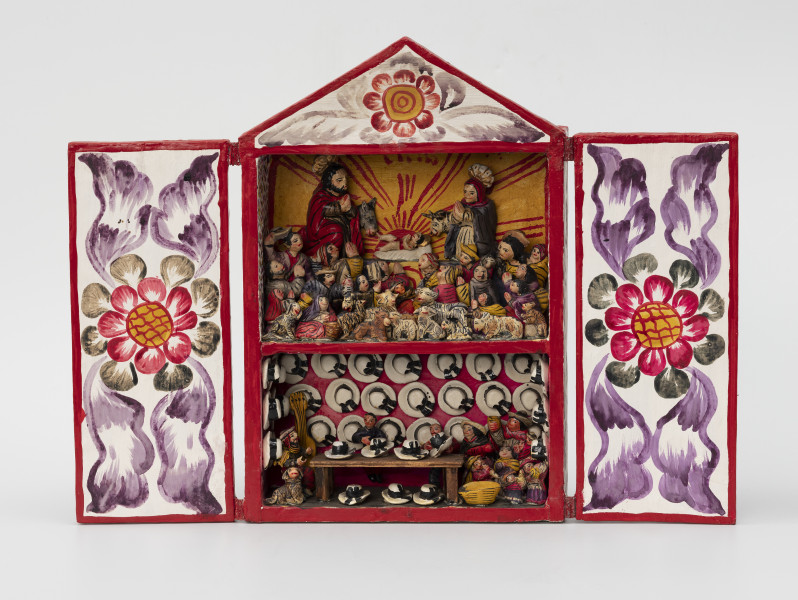
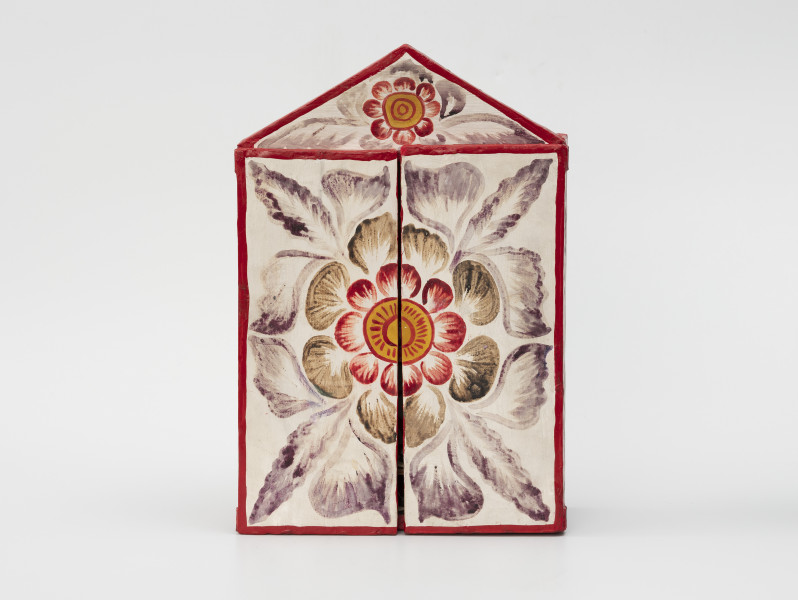
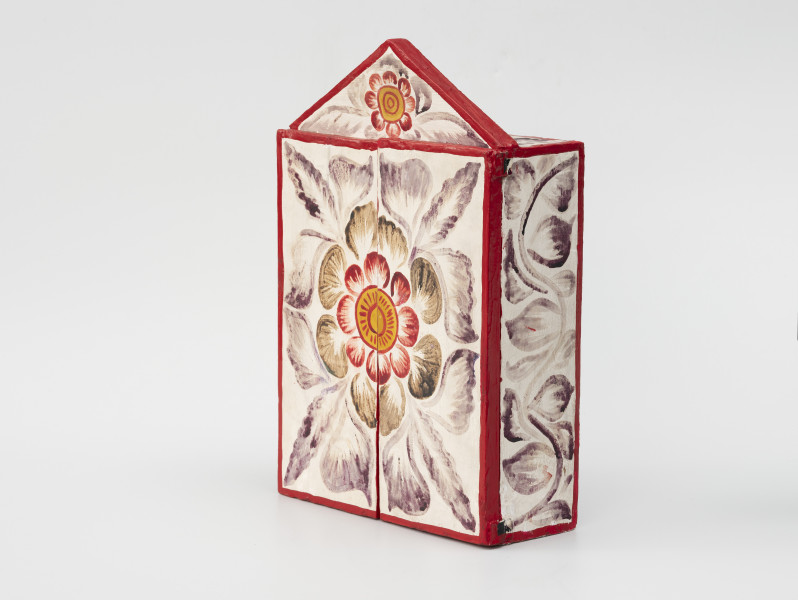
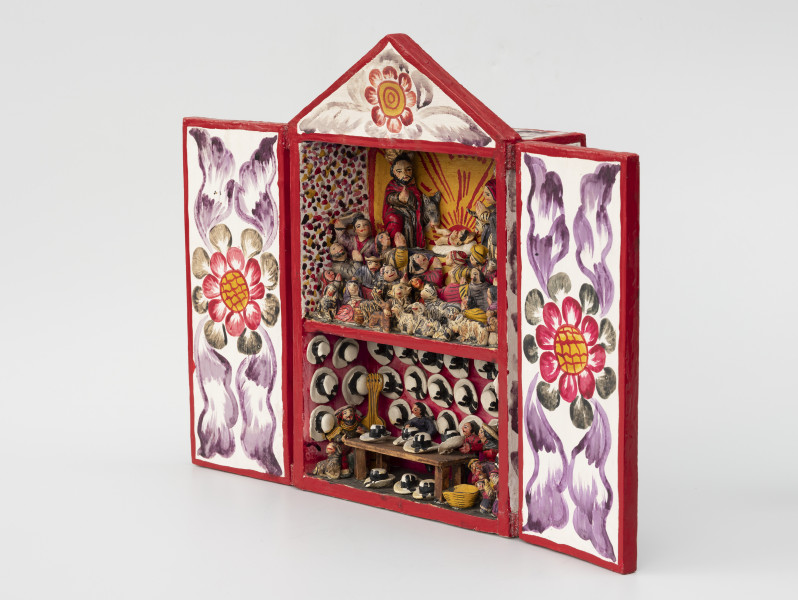
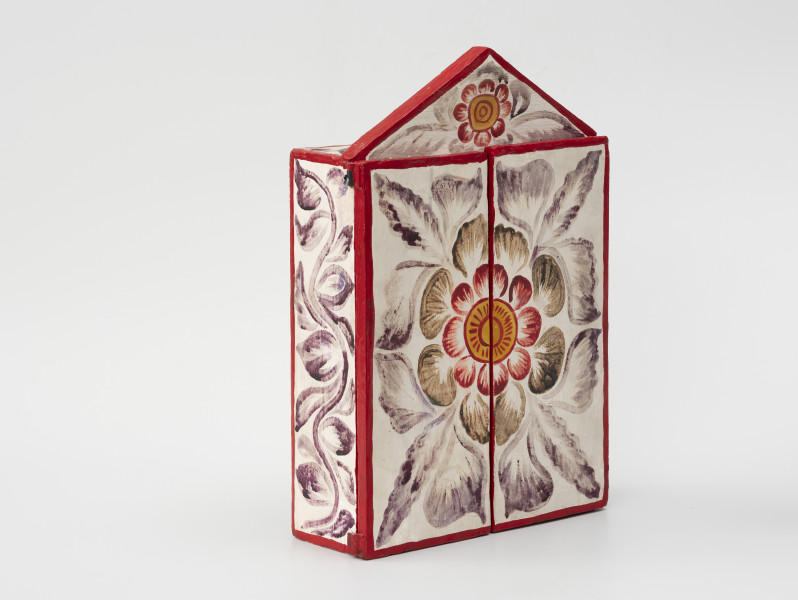
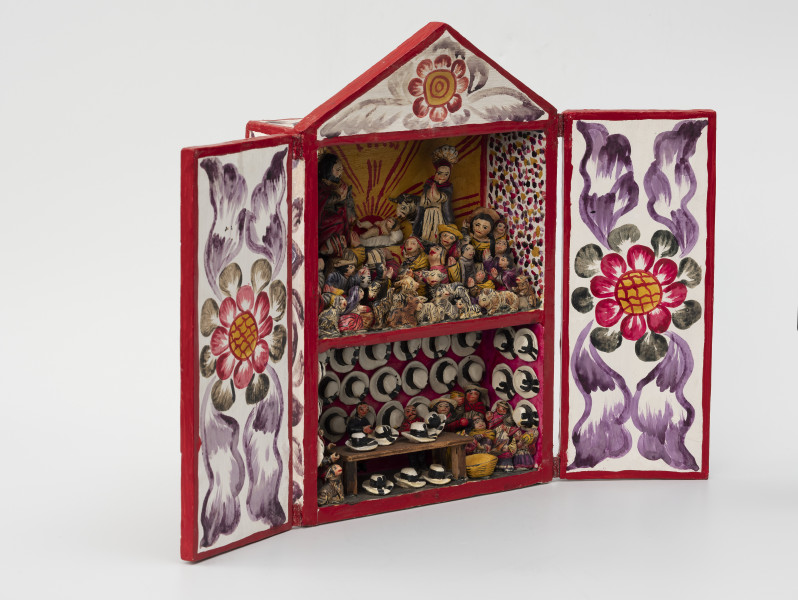
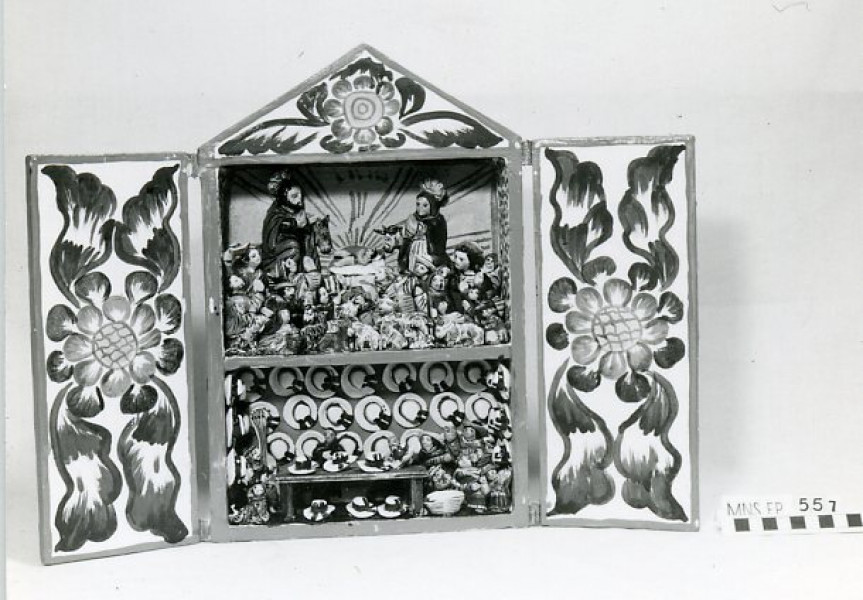
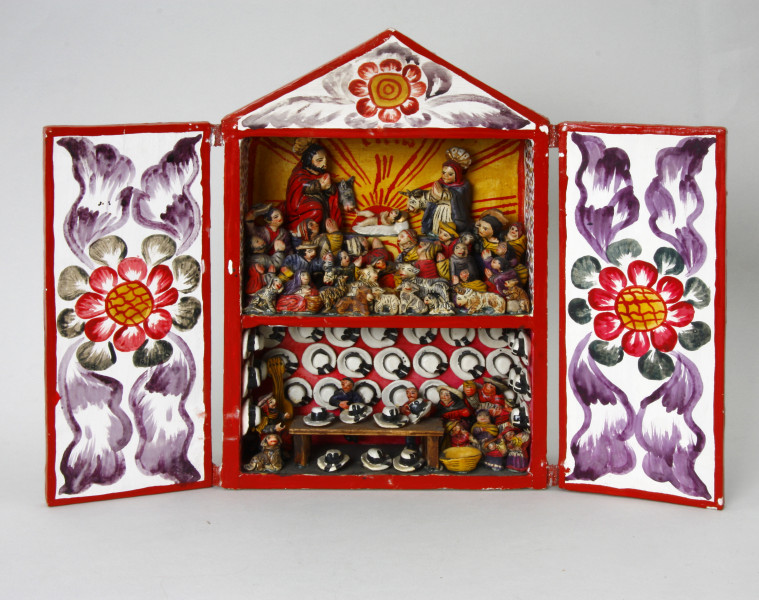
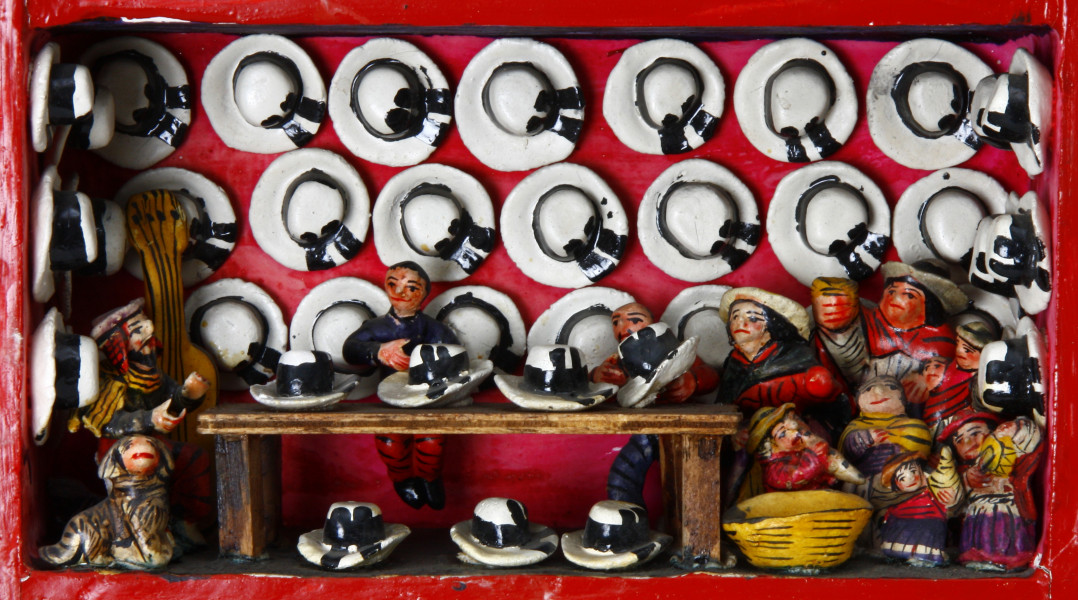
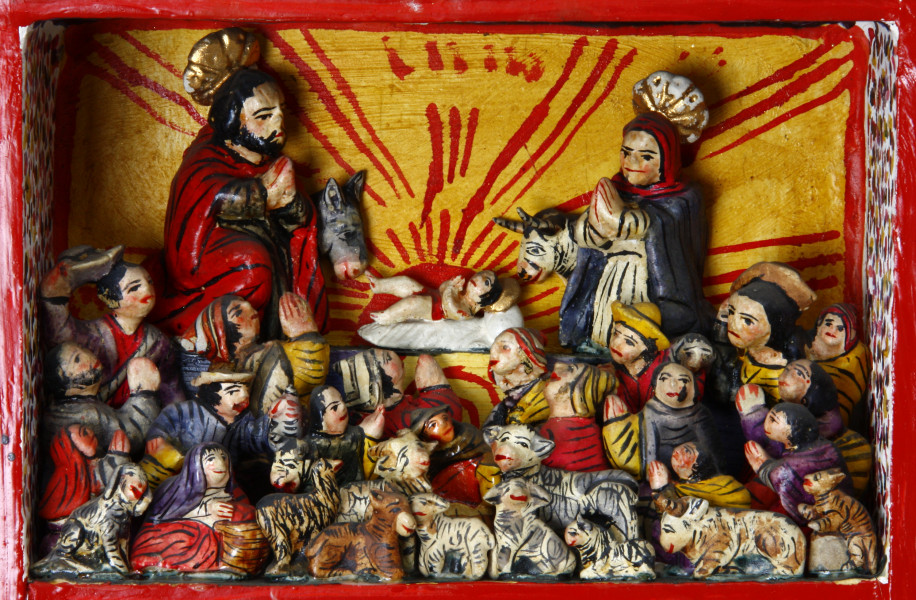
Peruvian retablo is a form of folk art in the shape of portable, multi-level boxes with two hinged doors, filled with colourful figurines arranged in scenes representing religious, historical, or everyday events important to Andean communities. Originating from the Ayacucho region of Peru, the tradition dates back to colonial times when portable altars with depictions of saints were used to evangelise the native population. In Andean cultures, retablos featuring Saint Mark (known as cajones sanmarcos), the patron of livestock, were particularly popular. They were believed to protect animals from theft and disease. They were also used in healing magic and during agricultural ceremonies. Over time, the content and purpose of these altars evolved to also offer protection for homes, their inhabitants, and travellers. In the 1940s and 1950s, retablos became recognised as valuable works of art, and their style changed significantly. Some were miniaturised, while others were expanded, adding additional levels (with five-tier arrangements up to a metre high). Today, artists decide which scenes will fill each tier. Traditionally, the upper tier was reserved for religious figures, while the lower levels depicted earthly life: harvests, processions, homes, shops, fiestas, or bullfights. In the example here, alongside the Nativity of Baby Jesus, a hat seller is shown surrounded by customers and musicians, creating a visual link to the religious scene above. The figurines are made from a paste of boiled potatoes and plaster powder, a traditional medium also used by today’s most famous retablista, academically trained artist Nicario Jiménez Quispe (1957–), who learned the craft from his father and grandfather. Quispe is known for his moving depictions of the struggles of Latin American immigrants. Katarzyna Findlik-Gawron
Author / creator
Object type
relief, crèche (visual work)
Technique
woodcarving techniques, modelling, painting
Material
wood, gypsum, potato paste, leather, tempera, lacquer, aniline dye, glue
Origin / acquisition method
purchase
Creation time / dating
Creation / finding place
Owner
The National Museum in Szczecin
Identification number
Location / status
circa 1505 — 1515
National Museum in Szczecin

1680 — 1700
National Museum in Szczecin

1978
National Museum in Szczecin
DISCOVER this TOPIC
National Museum in Lublin
DISCOVER this PATH
Educational path