


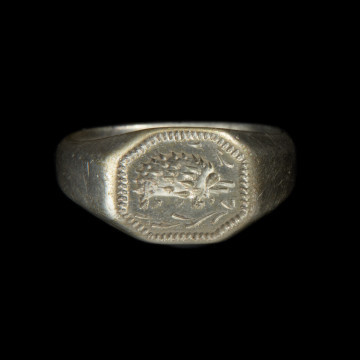
Signet ring with hedgehog
przełom XIV i XV wieku
National Museum in Szczecin
Part of the collection: Middle Ages
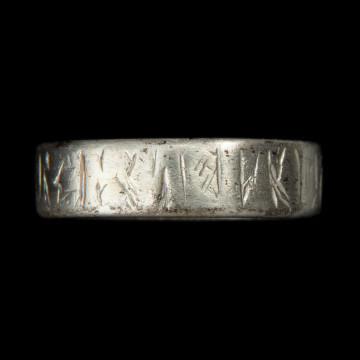
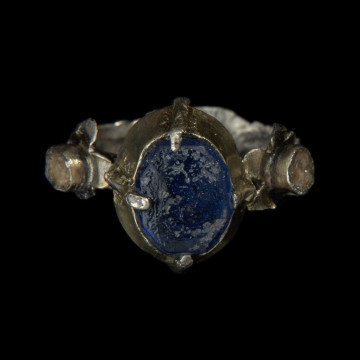
The ring from Cedynia, discovered at an early medieval cemetery (site 2a), was part of the grave goods in a child’s burial. Alongside the ring, the grave contained two bronze temple rings, two glass beads, an amber bead, a clay rattle in the form of a miniature vessel with a lid, and a silver coin with a hole, which may have been worn as a pendant. The Cedynia settlement complex is one of the most significant archaeological sites in Western Pomerania. The town, best known for the Battle of Cedynia in 972, was an important point of contact between Slavs, Germans, and Scandinavians due to its strategic location. Cedynia had two cemeteries, one of which was established after Mieszko I’s forces took control of the stronghold. Burials at this site followed the skeletal rite exclusively, reflecting the influence of Christianity, which Mieszko I adopted in 966. The Slavic tribes previously inhabiting the region practised cremation burials until the early 12th century when Bishop Otto of Bamberg led Christian missionary efforts in Pomerania. The preserved grave goods from the Cedynia cemetery reflect a mix of pagan and Christian customs. The tradition of placing offerings in graves, intended to provide for the deceased in the afterlife, was rooted in pagan beliefs and persisted for some time despite Christian prohibitions. The number of grave goods found at Cedynia is significantly higher compared to nearby cemeteries from the same period. Cedynia’s position on trade routes along the Oder River likely brought economic benefits, making it a hub for long-distance exchange. The wealth of its inhabitants, reflected in the numerous burial gifts, confirms their important role in regional trade and politics. Ewa Górkiewicz-Bucka
Author / creator
Object type
ring (jewellery)
Technique
nawijanie
Material
szkło kolorowe
Origin / acquisition method
field research
Creation time / dating
Creation / finding place
Owner
The National Museum in Szczecin
Identification number
Location / status
przełom XIV i XV wieku
National Museum in Szczecin
przełom XIV i XV wieku
National Museum in Szczecin
National Museum in Szczecin
DISCOVER this TOPIC
Museum of King Jan III's Palace at Wilanów
DISCOVER this PATH
Educational path