





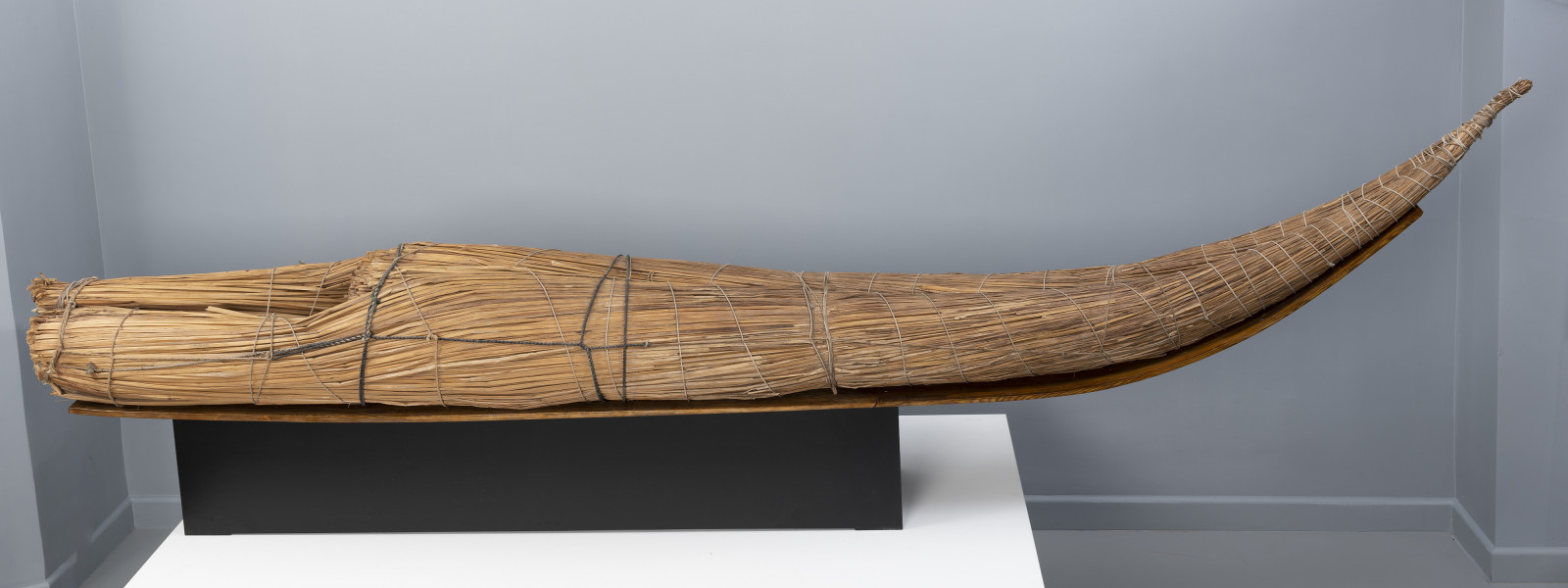
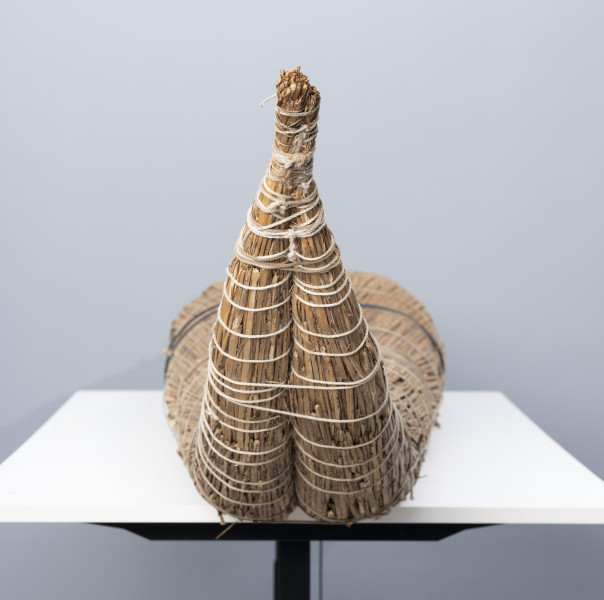
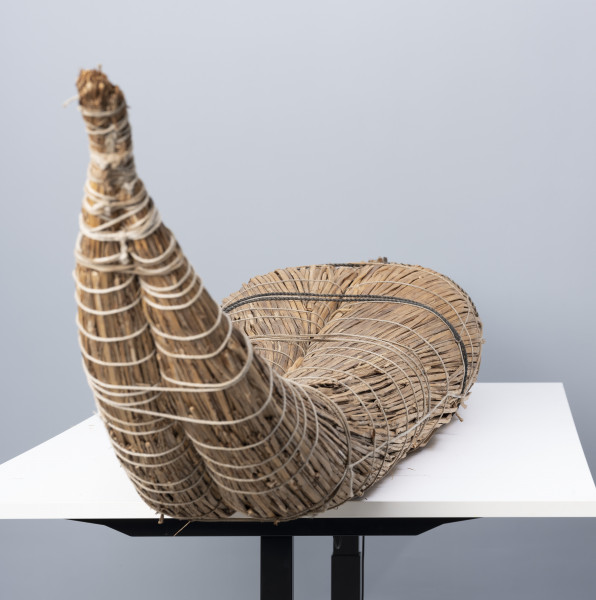
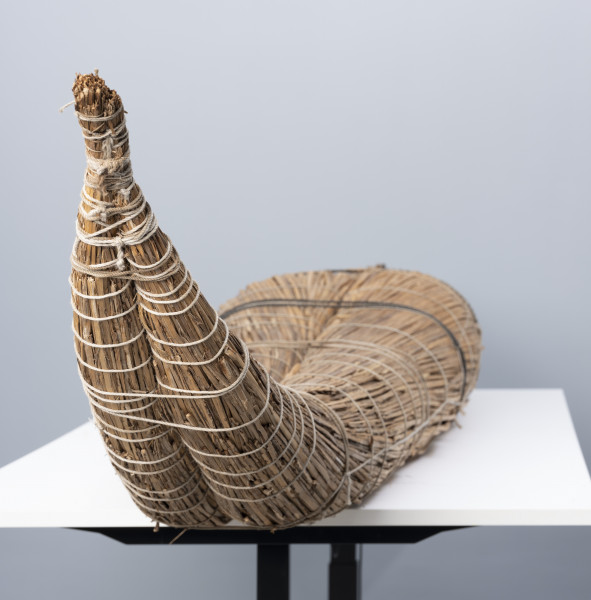

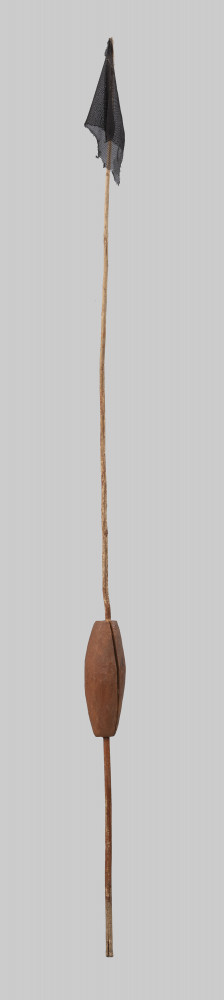
Marker bouy with a flag
1901 — 1950
National Museum in Szczecin
Part of the collection: Indigenous Latin American Communities Crafts
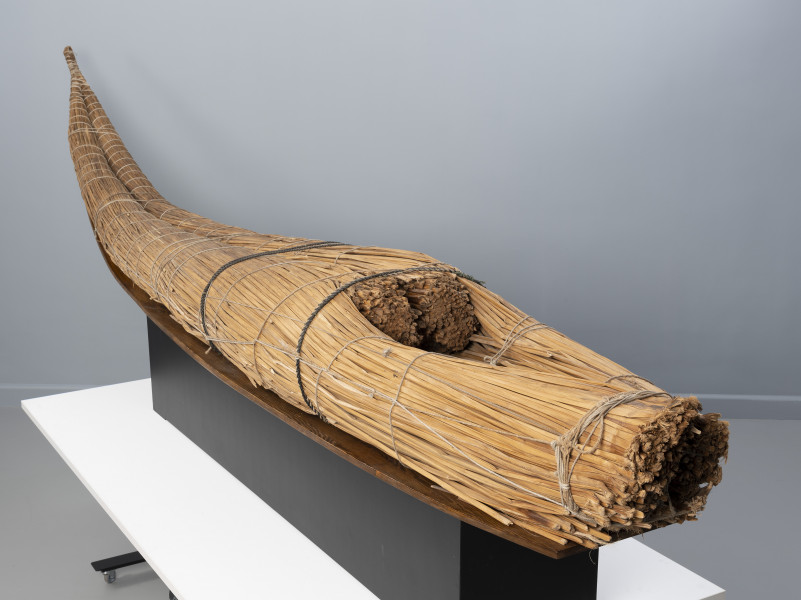
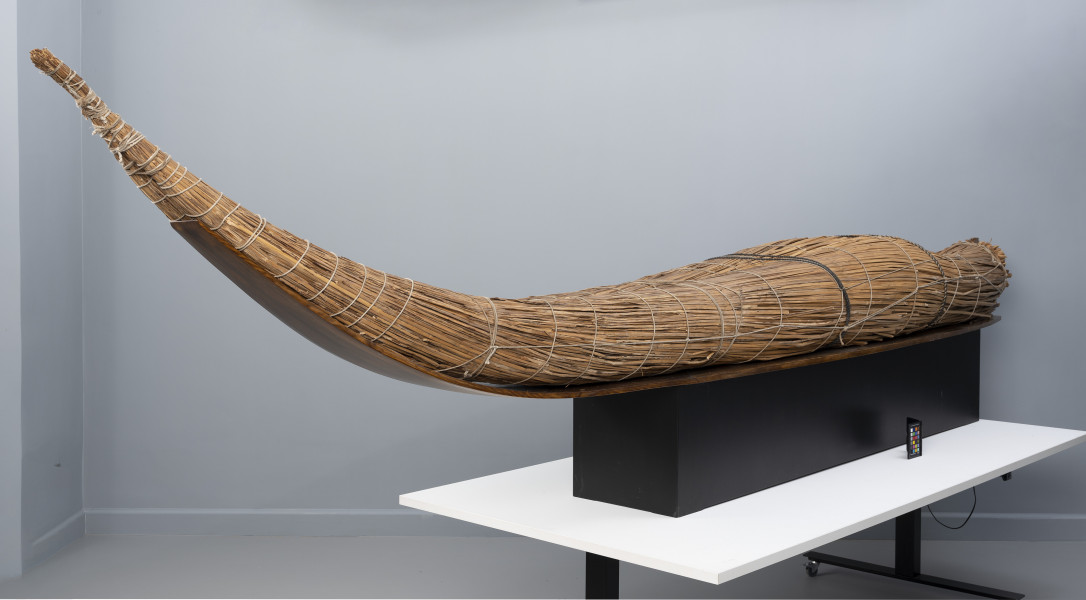
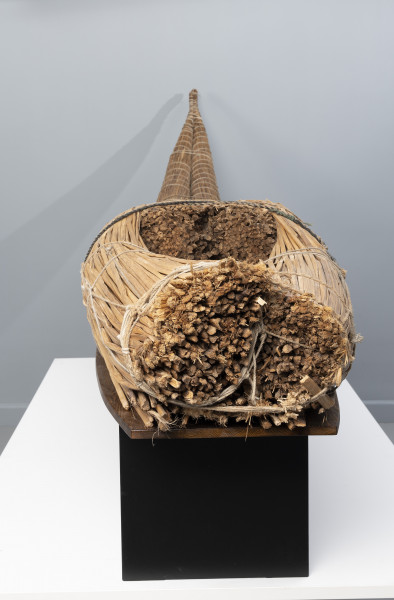
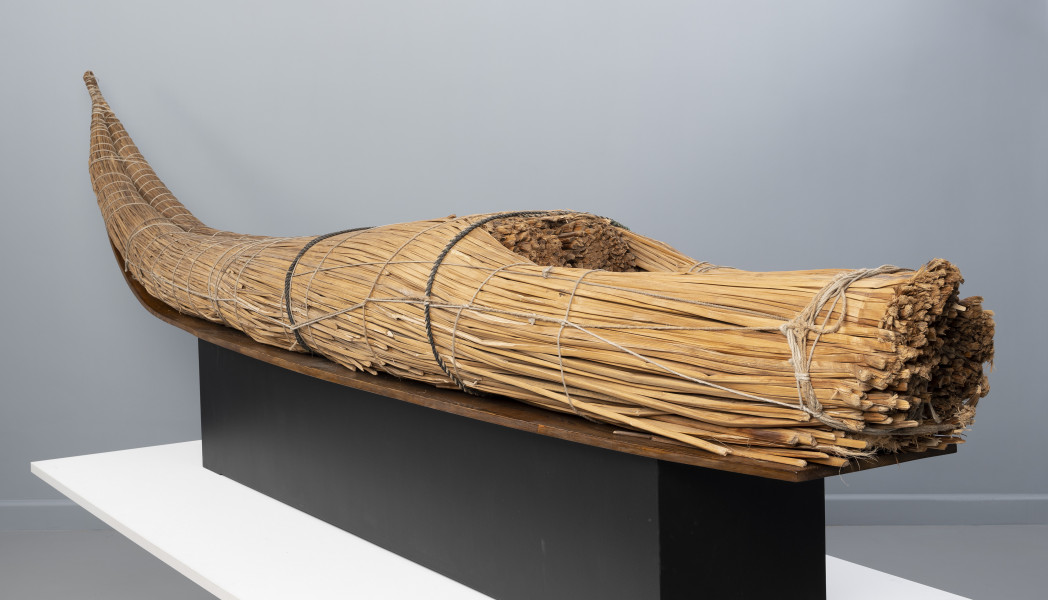
Name of one-person reed boats caballito de totora, literally means "horse of reeds" and is derived from the silhouette of a fisherman who, while rowing, takes a position similar to that of a jockey – kneeling on his boat with his legs on both sides of two bundles of unsinkable totor reed (Schoenoplectus californicus), tightly tied together with ropes. The narrow, high-raised bow ensures navigability on high ocean waves, and the notch in the stern is used to store nets, ropes, traps and the catch. While waiting for his catch, the fisherman takes a more comfortable posture – he straightens his torso and stretches his legs in front of him. After returning to shore, the boats are dried on the beach in an upright position, leaning against a fence specially erected for this purpose.
Reed steeds were common throughout the Peruvian coast, being used as long as 3000 years ago. Currently, one of the last places where they are still used is the popular seaside resort with a fishing settlement, Huanchaco in the north of Peru. The fishermen there are the last heirs of the great pre-Inca civilization of Mochica (Moche culture).
The presented boat, used for so long that it lost its displacement and would soon have to be replaced with a new one, was acquired by the participants of the Polish Scientific Expedition to the Andes, organized in 1978 to Peru and Bolivia. It was purchased in Huanchaco along with a second, new and slightly smaller copy. They came by ship from Lima to Gdynia, and finally found their way to the collections of Polish museums in Szczecin and Warsaw. In the years 2018-2023, the Szczecin boat underwent conservation. The work was carried out by Maciej Lango from the Conservation Department of the National Museum in Warsaw. They focused on improving the flexibility of the reeds and restoring the original, arched profile of the boat's bow stem. A stabilizing pedestal caballito was also made.
Katarzyna Findlik-Gawron
Author / creator
Object type
boat
Technique
binding, cutting
Material
totora reed (Schoenoplectus californicus), sznur bawełniany, synthetic rope
Origin / acquisition method
legal transfer
Creation time / dating
Creation / finding place
Owner
The National Museum in Szczecin
Identification number
Location / status
1901 — 1950
National Museum in Szczecin
1901 — 1950
National Museum in Szczecin
1890 — 1950
National Museum in Szczecin
DISCOVER this TOPIC
National Museum in Lublin
DISCOVER this PATH
Educational path