





Ornamental flowerpot
1501 — 1600
National Museum in Szczecin
Part of the collection: Asian art
Famille rose is a French term introduced in 1862 by Albert Jacquemart (1808-1875) to classify Chinese porcelain from the Qing dynasty, characterized by its pastel pink enamel. In fact, the intensity of the blush can vary from pale to deep ruby, and in addition to this, a number of other delicate colours are also used. The Chinese use the term fencai to describe famille rose porcelain, meaning "powder colours" or "pale colours". This is a newer term used instead of the previously used yangcai – "foreign colours". This colour palette was a European influence on the Chinese ornamentation of the time. The highest artistic level of famille rose pieces was achieved in the Jingdezhen factories during the Yongzheng period (1722–1735).
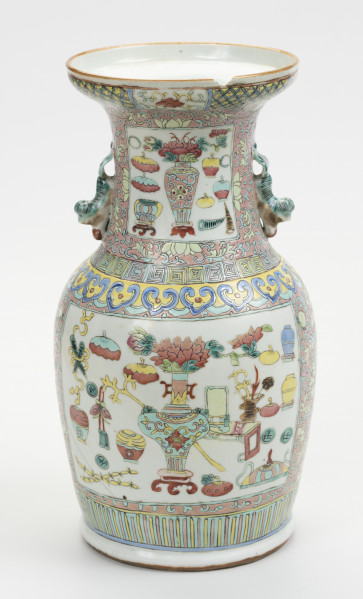
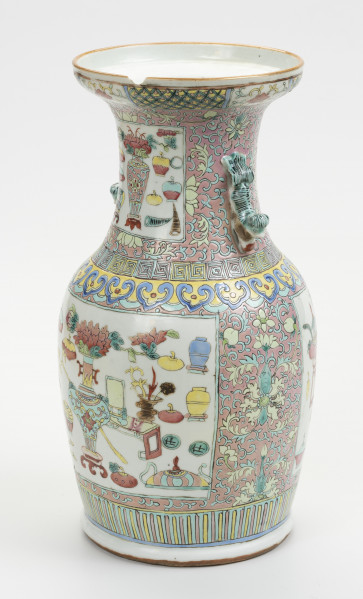
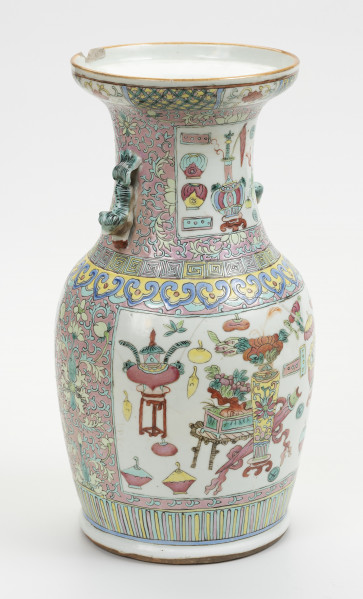
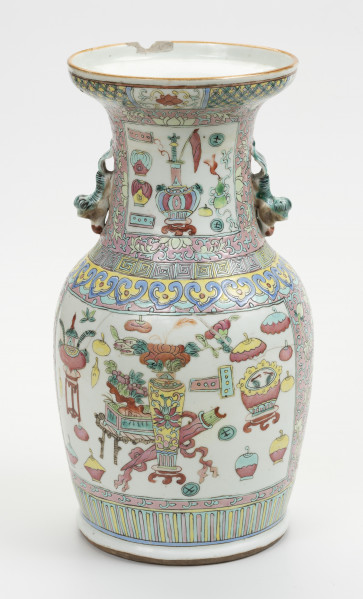
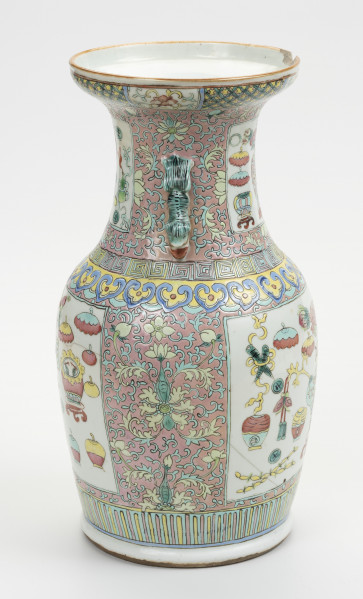
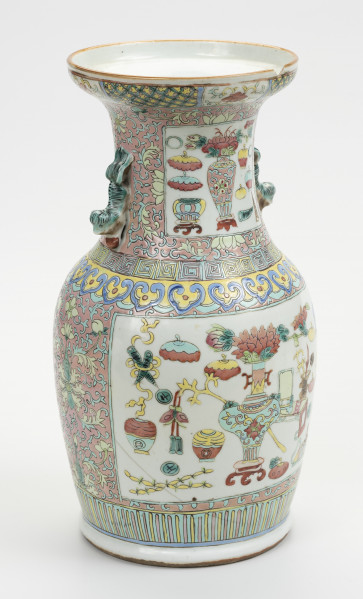
The presented piece is ornamented with a multi-coloured overglaze decorations. In the top part there are handles in the form of stylized lions (also known as fu or foo dogs) – a symbol of dignity and power. The belly and neck are decorated with quadrilateral fields filled with an ornament referred to as the Hundred Antiques or the Hundred Treasures, consisting of many – not necessarily a hundred – symbolic, mostly Taoist and Buddhist objects (usually including the so-called eight lucky emblems, eight treasures, four treasures, four pieces, attributes of eight immortals), plants and animals in a rather informal arrangement. The message of these motifs is related to spiritual, scientific or material prosperity, which is a constant source of joy. The following images can be distinguished on the presented vase: rhinoceros’ horns, plums, peonies, various tureens, aquariums, discs, a double gourd, a dressing table with a mirror, a pot with a miniature plant, a vessel on a high stand and other unidentified objects. The background consists of a stylized lotus motif with winding leaves on a pink base.
Katarzyna Findlik-Gawron
Author / creator
Object type
vase
Technique
glazing, paint over glaze, gold over glaze
Material
porcelain, enamel paint
Origin / acquisition method
acquisition
Creation time / dating
Creation / finding place
Owner
The National Museum in Szczecin
Identification number
Location / status
1501 — 1600
National Museum in Szczecin

1801 — 1910
National Museum in Szczecin

618 — 907
National Museum in Szczecin
DISCOVER this TOPIC
Museum of King Jan III's Palace at Wilanów
DISCOVER this PATH
Educational path