





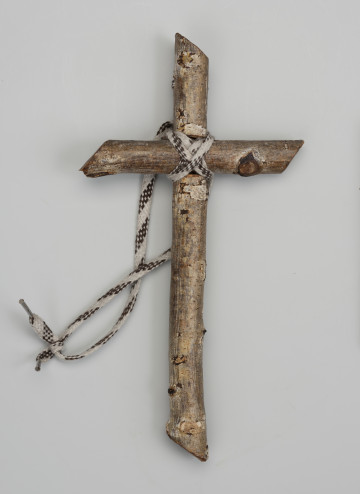
Pilgrimage cross
1980
National Museum in Szczecin
Part of the collection: Everyday life in the Polish People's Republic
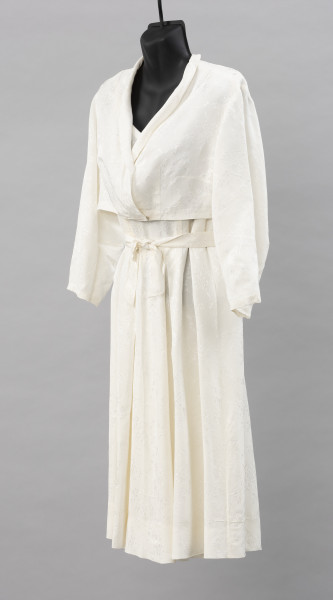
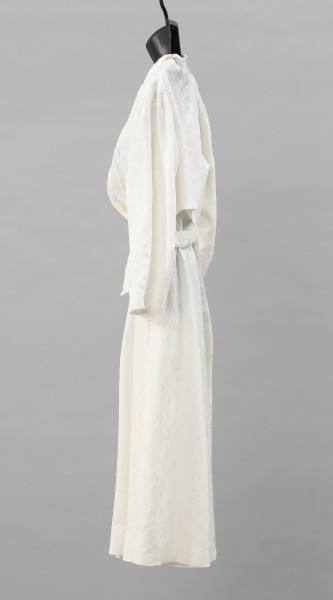
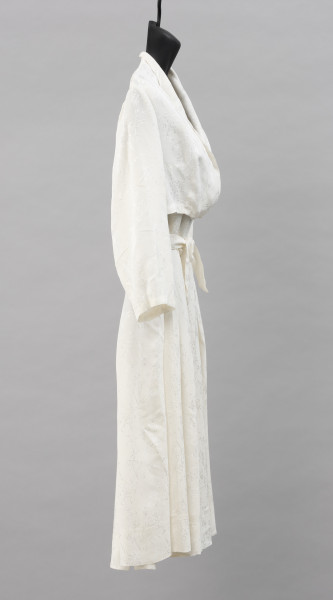
This plate was removed from Brallentin Palace (present-day Bralęcin, West Pomeranian Voivodeship) by the donor’s father after the building was set on fire by the Soviet Army at the end of the Second World War. For most of its recorded history—dating back to the 13th century—the estate belonged to the von Wedel family. Through Helena von Saldern (née von Wedel, 1844–1920), the property passed to the Seldern family. Its final owner between 1920 and 1945 was her son, Baron Otto von Saldern (1879–1948), who placed great importance on preserving the family archive. Some of the documents relating to this legacy are still held in the StaThis wedding dress belonged to Zofia Plater-Zyberk (1933–2019), a prominent social activist and pre-August opposition figure in Szczecin. She served as the Diocesan Family Life Adviser, was awarded the Order of Saint Otto of Bamberg in 2015, and posthumously received the Gold Cross of Merit. She was married to Michał Plater-Zyberk, a well-known opposition activist from Szczecin.
The dress is made from silk georgette, a popular fabric for dresses and blouses. Georgette is a type of crepe developed in the early 20th century by the French fashion designer Georgette de la Plante (active around 1910–1930). By using tightly twisted crepe yarn and a plain weave combining warp and weft threads twisted in opposite directions, she created a delicate yet relatively durable fabric.
In the first decade and a half after the Second World War, wedding fashion was marked by simplicity due to limited access to materials. Poverty forced people to alter and repurpose garments frequently. Clothes were shortened and resewn to fit changing needs and seasons. It was not until the 1960s that the fashion industry, including bridal fashion, began to flourish. Western trends began to reach Poland, especially those encouraging shorter hemlines and bare knees. Polish women started to embrace the mini.
In response, the communist authorities of the Polish People’s Republic, determined to combat all subversive influences, worked to develop the domestic clothing industry to counteract Western trends. This included the Dana and Odra Clothing Industry Factories in Szczecin. Women drew inspiration from women’s magazines, especially *Przekrój*. New patterns and choices became available, including in the wedding industry.
Author / creator
Object type
dress, wedding costume, womenswear
Technique
machine sewing
Material
georgette
Origin / acquisition method
donation
Creation time / dating
Creation / finding place
Owner
The National Museum in Szczecin
Identification number
Location / status
1980
National Museum in Szczecin

1887
National Museum in Szczecin

circa 1505 — 1515
National Museum in Szczecin
DISCOVER this TOPIC
National Museum in Szczecin
DISCOVER this PATH
Educational path